Ottawa's first-time buyer refund covered 82% in 2017. Now 39%.
Sep 22, 2026 · 5 min read · By Filmer Chu
Ontario gives first-time buyers a refund on land transfer tax. The maximum is $4,000. That number was set on January 1, 2017 and it has not moved since.
Ottawa house prices have. Here is what the refund was actually worth then, and what it is worth now.
Two numbers, nine years apart
In August 2017 the average residential sale price in Ottawa was $420,335. In August 2026 it was $688,253. Both figures are OREB's, same month, same property class, nine years apart.
Ontario taxes a one or two family residence out of four brackets. Half a per cent on the first $55,000, one per cent up to $250,000, one and a half up to $400,000, and two per cent on everything above that. The province publishes a shortcut for anything over $400,000: multiply the price by 0.02 and subtract $3,525.
Run it both ways.
August 2017: 420,335 x 0.02 = 8,406.70, less 3,525, gives $4,881.70 in tax. Subtract the $4,000 refund and the first-time buyer wrote a cheque for $881.70.
August 2026: 688,253 x 0.02 = 13,765.06, less 3,525, gives $10,240.06. Subtract the same $4,000 and the cheque is $6,240.06.
It covered 82% of the bill. It covers 39%.
4,000 divided by 4,881.70 is 81.9 per cent. 4,000 divided by 10,240.06 is 39.1 per cent.
The number that matters is the one with your name on it. It went from $881.70 to $6,240.06. That is 7.1 times.
Prices rose 63.7 per cent over those nine years. The gross tax bill roughly doubled, because every dollar of the increase falls in the 2 per cent bracket. The net bill went up seven-fold. That is what a fixed refund does when it sits underneath a rising tax. It never shrinks in dollars, it shrinks as a share, and everything it stops covering lands on the buyer.
To hold the ground it held in August 2017, the refund would have to be $8,391 today.
Nothing in Ottawa is under the line anymore
The $4,000 cap fully covers a purchase up to $368,333. The province rounds that down and describes it as the first $368,000. Below that line an eligible first-time buyer pays no land transfer tax at all.
In August 2017 the average Ottawa condo sold for $270,768. Tax on that is $2,536.52, well under the cap. An average condo came with a land transfer tax bill of zero.
August 2026, by segment:
- Apartments: average $426,930, median $379,500, benchmark $392,900
- Townhouses: average $529,123, benchmark $547,300
- Single family: average $845,113, benchmark $726,700
Every one of those clears $368,333. The closest is the apartment benchmark at $392,900, which is $24,567 over the line. There is no property class left in this city where a typical sale gets the refund in full.
One thing worth watching. The apartment benchmark is down 3.6 per cent year over year, the only major segment falling. Hold that pace and it touches $368,333 around the middle of 2028. That is the only route back to a zero bill I can find, and it needs the cheapest part of the market to keep getting cheaper for another two years.
The $400,000 line was drawn in 1989
Here is the part almost nobody knows. The 2 per cent bracket that swallows most of an Ottawa purchase starts at $400,000, and Ontario's own historical rate table dates that boundary to June 1, 1989.
In August 2017 OREB reported the two busiest residential price points were $300,000 to $399,999 and $400,000 to $499,999, together 55.6 per cent of the market. The single most active band in Ottawa sat entirely below the 1989 line.
Ottawa's median residential price is now $622,357. More than half the sales in this city clear a threshold that was set when a five-year mortgage cost you twelve per cent.
What it costs on closing day
Minimum down payment on $688,253 is 5 per cent of the first $500,000 plus 10 per cent of the rest. That is $43,825. The $6,240 of unrefunded land transfer tax equals 14.2 per cent of it.
Run the same arithmetic on August 2017 and you get a minimum down payment of $21,017 against an $882 tax bill. 4.2 per cent.
Measured against the cash a buyer has to assemble, this tax roughly tripled. It also cannot be financed. It leaves the same account as the down payment, on the same day, in certified funds.
What I would actually do about it
Budget the net number, not the refund. Take your target price, run the formula, subtract $4,000, and put the result in the closing column before you start looking at houses. On a $700,000 purchase it is about $6,500, and it sits on top of legal fees, title insurance and adjustments. I went through those line by line earlier this year.
Claim it at registration rather than after. Your lawyer selects the statements in the electronic land registration system and the refund offsets the tax right at closing, so the money never leaves your account. Miss it there and you pay the full amount and wait on the Ministry of Finance. You get eighteen months to apply and they pay no interest on it.
Check the eligibility rule before you count on the money. The test is never having owned a home anywhere in the world, and if your spouse owned one while you were spouses, neither of you gets anything. It is $4,000 per transfer, not per person, so two qualifying buyers do not get $8,000.
And if you are stacking an FHSA against the Home Buyers' Plan to build the down payment, remember this bill comes out after all of it.
I sell houses. I am not a tax lawyer, and your real estate lawyer is the one signing the affidavit, so put the eligibility question to them and not to me.
Worth ending on the other side of the ledger. Sales are down sharply this year, inventory is at its highest August level since 2016, and apartments are the softest segment in the market. A first-time buyer has more room to negotiate right now than at any point in the last several years, and that room is worth considerably more than $6,240.
Want the closing number run on a real address instead of a citywide average? Send me the price you are considering and I will give you the tax, the refund and what is actually left to pay. 613-262-6545, or fil@613realtor.ca.
Want to talk this through?
Email fil@613realtor.ca or call 613-262-6545.
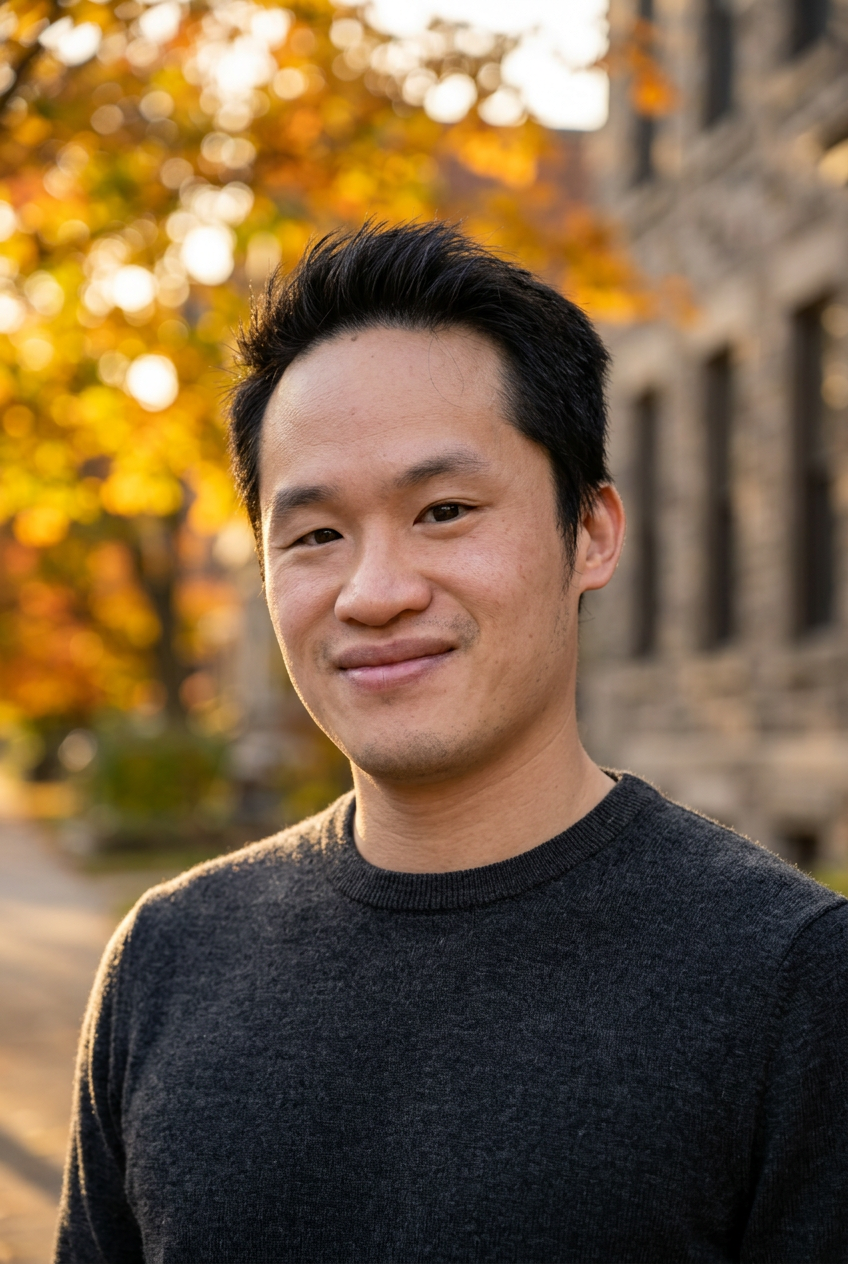
Filmer Chu
Broker · Zolo Realty. Ottawa-rooted. Writing about the market I work in every day.